Quick Answer
Crypto and stocks differ in four big ways: volatility (crypto swings far more), trading hours (crypto is 24/7, stocks are exchange-hours), regulation (stocks are heavily regulated, crypto partially), and returns (crypto has had higher upside and deeper drawdowns historically). Neither is “better” — they serve different roles. Many investors hold both: stocks for stability and crypto as a small, higher-risk allocation. 

Head-to-Head: Crypto vs Stocks 2026
| Factor | Crypto | Stocks |
|---|---|---|
| Volatility | Very high (10%+ daily swings) | Low–moderate (typically <2–3% daily) |
| Trading hours | 24/7/365 | Exchange hours (9:30am–4pm ET) + pre/post |
| Regulation | Evolving, partial | Heavy, SEC/regulators |
| Underlying value | Network adoption/story | Company earnings/assets |
| Long-term horizon | Short history (~15 yrs) | Decades of data |
| Access | Global, low barriers | Brokerage + some restrictions |
| Taxation | Capital gains, complex (see US/Canada) | Capital gains, dividends |
| Leverage/futures | Widely available, risky | Available, regulated |
Volatility: The Biggest Difference
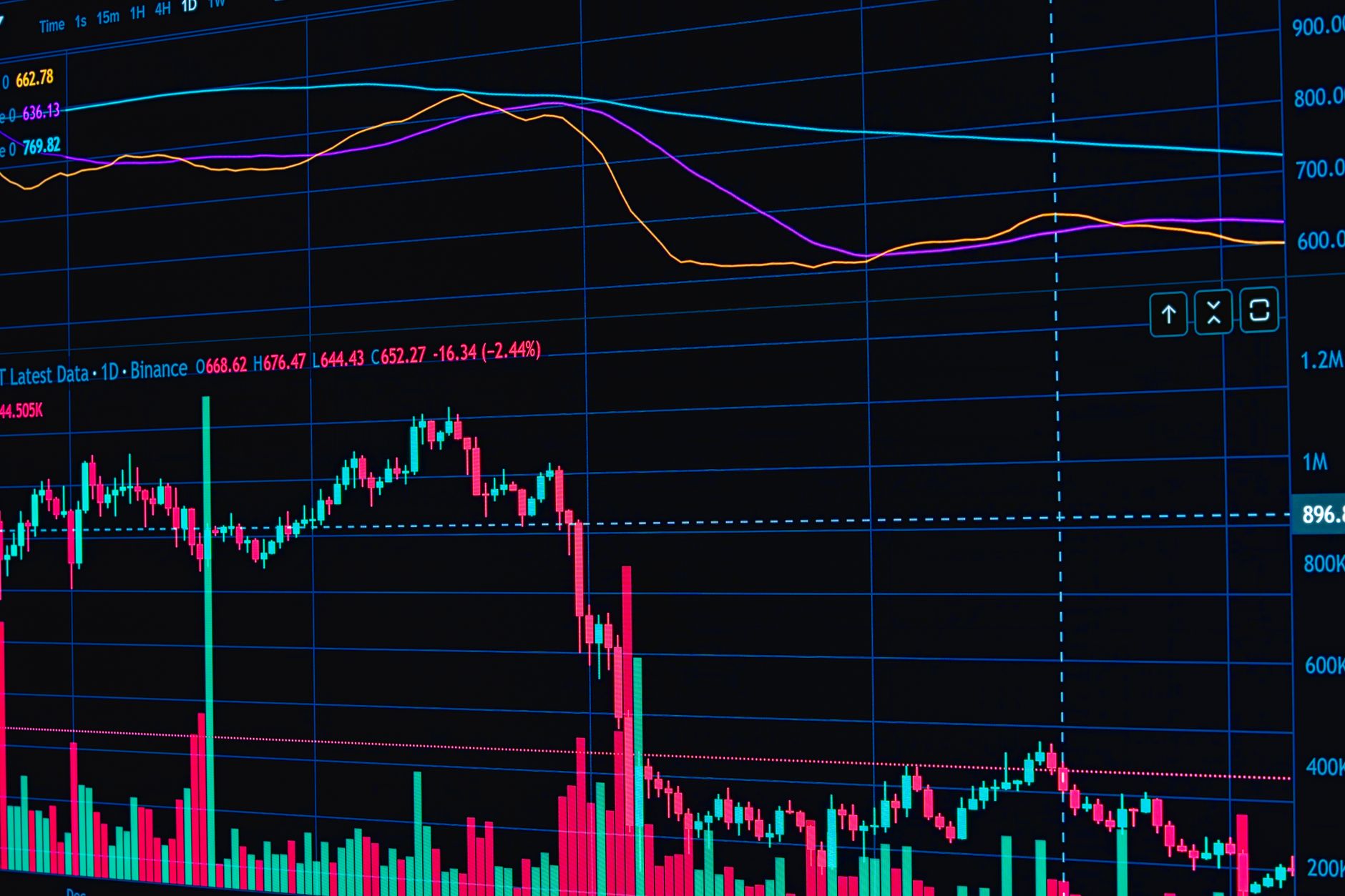
Crypto is dramatically more volatile than stocks. A 20–50% drawdown in crypto is routine; a 20% stock drawdown is a notable bear market. - Crypto daily moves: often ±5–15%, sometimes more, even for the largest coins by market cap. - Stock daily moves: typically under ±3%; large events are the exception rather than the rule. - Meme coins and altcoins are far more volatile than BTC or ETH, and can swing 30%+ in a single session on thin liquidity. Implication: Crypto can produce higher short-term returns, but also deeper, faster losses. Position sizing matters enormously. A useful rule of thumb: size any individual crypto position as if you could lose 100% of it without changing your financial plans — that framing keeps volatility from becoming a source of panic-driven decisions during the inevitable sharp drawdowns. —
Trading Hours: 24/7 vs Exchange Hours
Crypto trades every hour, every day, all year. Stocks trade on a schedule (9:30am–4pm ET, with limited pre/post-market). What this means:
- Crypto responds instantly to weekend/news events — you can act or be hit at 3am Sunday. - Stock markets gap open — you can’t exit exactly at the weekend’s close. - Crypto’s 24/7 nature can create overnight/weekend risk that stocks don’t have. - It can also be an advantage: no waiting for the bell. —

Regulation & Investor Protection
Stocks sit inside one of the most regulated markets in the world:
- SEC registration, audited financials, insider-trading rules, investor protections. - Brokerage accounts have strong recourse and (in the US) SIPC protection. Crypto has a patchwork:
- Major US exchanges are regulated (Coinbase/Kraken), but the asset class itself is less protected. - Not FDIC/SIPC insured for crypto holdings. - Self-custody means you are responsible for security (security guide). Implication: Stocks offer more investor recourse; crypto offers more autonomy and less protection. Both have legitimate places. If regulatory recourse and deposit insurance matter to you, weight your portfolio toward stocks and treat crypto self-custody as a skill you need to actively learn, not a convenience you can ignore — the tradeoff for autonomy is that mistakes (lost keys, phishing, sending to the wrong address) are permanent and unrecoverable in a way a brokerage error usually isn’t. —
Historical Returns & Volatility
- Stocks (S&P 500): historically averaged ~7–10%/yr with periodic bear markets. Long, reliable compounding. - Bitcoin/crypto: shorter history with occasional meteoric cycles (e.g., thousands-of-percent bull runs) followed by 70%+ crashes. Average annual returns over its existence have been eye-popping but with extreme drawdowns and survivorship caveats. Past performance doesn’t guarantee future results. Crypto’s headline returns reflect an early-stage, high-risk asset, and much of its historical return came from a period when the asset class was tiny and adoption was compounding from a near-zero base — a dynamic that naturally slows as the market matures. Extrapolating early-cycle percentage gains indefinitely into the future is one of the most common mistakes new crypto investors make. —
Portfolio Roles: How They Fit Together
| Investor Goal | Better Fit |
|---|---|
| Long-term wealth with stability | Stocks/ETFs |
| High-risk, high-reward speculation | Crypto (small allocation) |
| 24/7 liquid exposure | Crypto |
| Retirement/tax-advantaged growth | Stocks, or Bitcoin ETFs in IRAs |
| Diversification beyond traditional markets | A small crypto slice |
A common, sensible approach: a core portfolio in diversified stocks/ETFs, plus a small crypto allocation (e.g., 1–5%) you can afford to lose, with the crypto concentrated in major assets like BTC/ETH. Where you land on that 1-5% range should reflect your age, income stability, and existing net worth outside the portfolio. A 28-year-old with steady income and a long runway to recover from a drawdown can reasonably lean toward the higher end; someone within a decade of retirement, or relying on the portfolio for near-term expenses, should stay conservative regardless of how compelling the crypto narrative of the moment feels. —
The Engine Behind Each: Earnings vs. Network Adoption
The most fundamental difference between a stock and a cryptocurrency is why its price moves. A stock represents ownership in a real business that produces earnings, assets, and cash flows. Its long-term price tracks whether that business profits, grows, and returns value to shareholders through earnings growth, buybacks, and dividends. A cryptocurrency, by contrast, is a token on a network whose price reflects supply/demand for that network’s adoption, usage, and narrative — most crypto has no underlying business, no earnings, and no cash flow to anchor its valuation. This is why fundamental analysis looks so different:
Liquidity, Volatility, and Risk Profile in Depth
Investors use beta to measure volatility relative to the broader market (stocks beta ~1). Crypto behaves like an extremely high-beta asset: when markets rise, crypto often rises more; when they fall, it falls much harder. In practice:
- Stocks of large companies trade on deep, regulated exchanges with narrow bid-ask spreads — you can usually buy/sell large amounts without moving the price much. - Crypto liquidity varies wildly. Major coins like BTC and ETH on top exchanges are quite liquid, but altcoins and meme coins can have thin books where a single large order causes significant slippage. Meme coins in particular can be extremely hard to exit at a sane price during a crash. ### Tail Risk
Costs, Taxes, and Practical Friction
-
Stocks: commission-free trading at most US/Canadian brokers, plus expense ratios for ETFs (often 0.03–0.20%). Dividend income can be reinvested automatically. Holding costs are minimal. - Crypto: trading fees and spreads vary by exchange (0.1–0.6%+). Sending crypto incurs network/gas fees, and staking locks funds. Self-custody adds the responsibility of securing your own keys. ### Tax Differences
-
Stocks: US traders enjoy the wash-sale rule — you can lock in a loss for tax purposes and buy back immediately. Dividends are taxed as income. - Crypto: in the US, crypto has no wash-sale rule (losses are disallowed if you repurchase within 30 days around the sale), and every trade — including crypto-to-crypto — is a taxable event. In Canada, ACB average-cost tracking applies. Crypto taxes are more complex and easier to get wrong. > 💡 For holdings in tax-advantaged accounts, Bitcoin ETFs let you hold BTC inside an IRA/401(k) — combining crypto exposure with stock-like retirement tax treatment. —
How Correlated Are Crypto and Stocks? Correlation is the key to whether crypto “diversifies” a stock portfolio. Historically:
The practical takeaway: crypto adds diversification and uncorrelated upside in normal conditions, but in a market-wide crash it behaves more like a risk asset than a safe haven — so don’t expect crypto to reliably hedge a stock market drawdown. Many investors instead treat crypto as a separate, higher-risk sleeve sized on risk tolerance, not as a hedge. Why correlation shifts matter for rebalancing: because crypto and stocks decouple in calm markets but converge under stress, a portfolio that looked well-diversified in a bull run can suddenly behave like one concentrated bet during a downturn. This is exactly when investors are tempted to sell at the worst time. Building your allocation with that stress-correlation in mind — rather than the calm-market correlation you see most of the time — leads to more realistic expectations and fewer panic decisions when both assets fall together. —
A simple framework to decide where crypto fits:
- Define your horizon — if you invest for <5 years, favor stocks; crypto’s volatility is better suited to longer or purely speculative horizons. 2. Settle your risk tolerance — can you stomach a 70% drawdown without selling? If not, keep crypto tiny. 3. Size crypto as a “satellite” — a core stock/ETF portfolio plus a small crypto allocation (1–5%) is the most common prudent structure. 4. Prefer major coins — if you invest in crypto at all, concentrate in BTC and ETH rather than volatile altcoins/meme coins. 5. Use tax-advantaged vehicles where possible — Bitcoin ETFs inside retirement accounts. 6. Handle security & taxes correctly — self-custody best practices (security guide) and accurate tax tracking (US/Canada). 7. Rebalance on a schedule, not on emotion. If crypto grows to 15% of your portfolio after a rally, trim it back toward your target allocation rather than letting a winning position take over your risk profile. The same discipline applies in reverse after a crash — resist both the urge to chase and the urge to panic-sell. 8. Revisit the split annually. Your ideal crypto allocation at 25 with decades to recover from a drawdown looks different than at 55 approaching retirement. Treat the percentage as a living number tied to your changing time horizon, not a one-time decision. —
FAQ
Which is more volatile, crypto or stocks? **Crypto is far more volatile.** Daily moves of ±5–15% are common, versus typically under ±3% for stocks. Altcoins and [meme coins](/articles/meme-coins-guide) can be dramatically more volatile than BTC/ETH. ### Can I trade crypto and stocks 24/7? No. **Crypto trades 24/7/365.** Stocks trade only during exchange hours (with limited pre/post-market). That 24/7 nature is a defining difference — and a source of weekend/overnight risk in crypto. ### Is crypto more regulated than stocks? The opposite — **stocks are far more regulated**. Stocks have SEC oversight, audited financials, and investor protections. Crypto has evolving, partial regulation; exchanges operating in the US/Canada must register, but the assets themselves are less protected (no FDIC/SIPC). ### Can I buy stocks and crypto in the same app? Increasingly, yes. Some platforms (like [Wealthsimple](/articles/best-crypto-exchanges-canada) in Canada) combine stocks and crypto. Separately, crypto exchanges handle crypto and brokerages handle stocks, though integrated platforms are spreading. ### Should I invest in crypto or stocks? That depends on your goals, risk tolerance, and time horizon. **Stocks** are better for long-term, lower-volatility wealth building. **Crypto** is a higher-risk, higher-potential speculative allocation. Many investors hold both — with crypto as the smaller, more volatile slice. ### Are crypto gains taxed the same as stock gains? Similar in principle but with differences. Both are generally capital gains. Crypto has **more complex rules** (every trade is taxable, ACB vs FIFO, no wash-sale rules in the US, etc.) — see our [US](/articles/crypto-taxes-usa) and [Canada](/articles/crypto-taxes-canada) tax guides. > ⚠️ **Disclaimer:** Informational only, not financial advice. Understand your own risk tolerance and situation before investing in either asset. Crypto is particularly volatile and can lose most of its value. This site is affiliate-supported. *Disclaimer: This article is for informational purposes only and does not constitute financial advice.*
The Bottom Line
This guide covers what you need to know. Check our related articles for deeper dives into specific topics.