Best Bitcoin ETFs 2026: IBIT, FBTC, ARKB, GBTC Compared
The best spot Bitcoin ETFs of 2026 compared. Fees, AUM, and performance of BlackRock IBIT, Fidelity FBTC, ARK ARKB, and Grayscale GBTC Clear guidance you can.
August 5, 2026 · 11 min · Jarrod Gravison
Quick Answer: The best spot Bitcoin ETFs in 2026 are BlackRock’s iShares Bitcoin Trust (IBIT) (largest AUM, lowest risk of issuer distress), Fidelity Wise Origin Bitcoin Fund (FBTC) (strong brand + low fees), and ARK 21Shares Bitcoin ETF (ARKB) (competitive fees). Grayscale GBTC is now a low-fee spot ETF but has higher expense drag than peers following its conversion. All are SEC-approved, trade on US stock exchanges, and offer a simple, regulated way to gain Bitcoin exposure inside a brokerage account. Spot Bitcoin ETFs — approved by the SEC in January 2024 — let you buy Bitcoin through a traditional brokerage just like a stock. No crypto wallet, no exchange account, no private keys. The fund holds actual Bitcoin and its price tracks the asset closely. For most investors, an ETF is the simplest and most tax-friendly way to own Bitcoin in a US taxable or retirement account. This guide compares the four biggest spot Bitcoin ETFs across fees, assets under management (AUM), and tracking considerations. ## Quick Answer
Quick Answer: See the comparison table and detailed breakdown below for our top recommendations and everything you need to choose the right option for your needs.
The best spot Bitcoin ETFs in 2026 are BlackRock’s iShares Bitcoin Trust (IBIT) (largest AUM, lowest risk of issuer distress), Fidelity Wise Origin Bitcoin Fund (FBTC) (strong brand + low fees), and ARK 21Shares Bitcoin ETF (ARKB) (competitive fees). Grayscale GBTC is now a low-fee spot ETF but has higher expense drag than peers following its conversion. All are SEC-approved, trade on US stock exchanges, and offer a simple, regulated way to gain Bitcoin exposure inside a brokerage account.
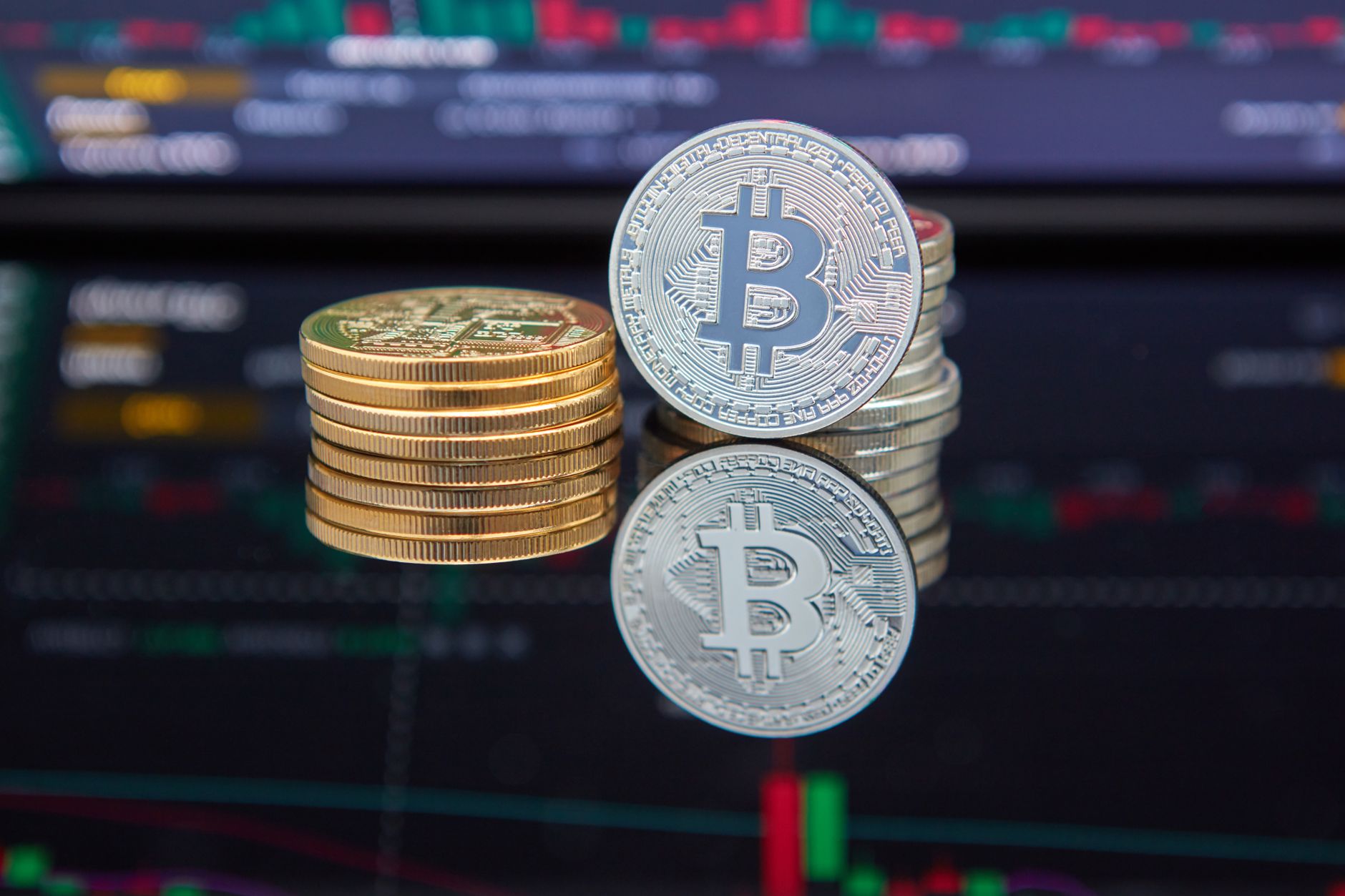
<img src="/images/best-bitcoin-etfs-body-1.jpg" alt=“Gold Bitcoin coin with blurred financial chart in background, representing cryptocurrency trading.
Expense ratios are the #1 recurring cost of a Bitcoin ETF, so it pays to compare them precisely:
On a $50,000 position, every 0.10% of expense ratio costs you about $50/year in drag. Over a decade that compounds significantly, so choosing a 0.21% fund over a 1.5% fund (GBTC’s legacy tier) can save you hundreds of dollars a year. IBIT, FBTC, and ARKB cluster in a narrow, competitive band, while GBTC is the wild card whose fee is tiered downward as its asset base grows. ### Tracking Error: Does the ETF Match Bitcoin? Spot ETFs track the spot BTC price, but tracking error can still occur briefly due to creation/redemption mechanics, small cash balances, and pricing close to NAV at market open. In practice, IBIT/FBTC/ARKB track Bitcoin extremely tightly — within a fraction of a percent most days. Significant persistent tracking error is rare with spot ETFs (unlike futures-based funds, which suffer roll costs). If you see an ETF consistently lagging Bitcoin by more than the expense ratio, that’s worth investigating, but it’s not a practical worry with these four. —
A spot Bitcoin ETF holds physical Bitcoin in custody (usually Coinbase Custody or a bank-grade custodian) and issues shares that trade on stock exchanges. Key mechanics:
You don’t own Bitcoin directly — you own a fund share whose price tracks Bitcoin. - Redeemable/custodial — the ETF must hold enough actual BTC to back all shares, audited via proof-of-reserves/tax. - Traded 9:30am–4pm ET on US exchanges (not 24/7 like crypto). - Taxable as a commodity/security — you pay capital gains on sale, treated like other securities. Because IBIT and FBTC are approved spot ETFs, you can buy them inside IRAs and 401(k)s, where Bitcoin couldn’t easily be held before. That’s a major advantage for retirement investors. ### Options and Advanced Exposure
Beyond simply buying shares, several Bitcoin ETFs now have listed options you can trade with standard brokerage accounts. IBIT has the deepest, most liquid options market of the group, letting you run covered calls, protective puts, cash-secured puts, or even speculative call strategies without touching crypto directly. FBTC and other funds have added options more gradually. If covered-call income or downside protection is your goal, the presence of a liquid options chain is a real, concrete advantage of the ETF wrapper — something you can’t do as easily with coins sitting in a wallet. —
BlackRock’s IBIT is the market leader by a wide margin, holding the largest AUM and the deepest trading liquidity of any spot Bitcoin ETF. BlackRock used its institutional reach to make IBIT the default choice for advisors, retirement plans, and large investors. Key strengths:
✅ Competitive 0.25% (0.12% for first 12 months promotional)
✅ Deeply integrated with registered investment advisors
❌ Slightly higher fee than ARKB
❌ No direct Bitcoin self-custody (like FBTC offers)
Fidelity’s FBTC matches IBIT’s 0.25% fee and offers a distinctive feature: self-custody of the underlying Bitcoin by Fidelity Digital Assets (rather than a third-party custodian like Coinbase). For investors who care about how the asset is held, that’s a meaningful difference. Key strengths:
✅ Highly trusted sponsor (Fidelity)
✅ Self-custody of underlying BTC via Fidelity Digital Assets
✅ Strong asset growth
✅ Clean 0.
3. ARK 21Shares Bitcoin ETF (ARKB) — Best Low Fee#
ARKB, a partnership between ARK Invest and 21Shares, launched with the most competitive early fee in the category (0.21%, with a zero-fee promotional period for the first six months on the first $1B). It’s a strong, liquid option for fee-conscious Bitcoin investors. Key strengths:
✅ Very low expense ratio
✅ Strong early asset flows and liquidity
✅ Backed by established crypto issuer 21Shares
✅ ARK brand built for innovator-focused investors
❌ Slightly smaller AUM than IBIT/FBTC
Who it’s for: Fee-conscious investors who still want a top-tier, liquid spot ETF. ## 4. Grayscale Bitcoin Trust (GBTC) — Best for Legacy Holders
GBTC originally launched as a closed-end trust with a high 2% fee, trading at large premiums/discounts. After the SEC approved its conversion to a spot ETF in 2024, Grayscale cut the fee dramatically (eventually to a tiered structure around 0.15–1.5% depending on AUM) so it could compete. It holds vast Bitcoin but carries legacy fee complexity. Key strengths:
✅ Huge existing Bitcoin holdings
✅ Now a genuine spot ETF
✅ Fee tiered down over time
❌ Higher fee tier than peers for now
❌ Legacy complexity and previous discount history
Who it’s for: Long-time GBTC holders and those already deep in the Grayscale ecosystem. —
Retirement accounts: because IBIT/FBTC are SEC-registered funds, you can hold them inside IRAs and 401(k)s — a huge improvement over earlier years when Bitcoin was hard to hold tax-sheltered. - Dollar-cost averaging: you can set up automatic fractional buy orders in your brokerage, smoothly building position over time — an ideal match for the DCA strategy. - Simpler tax reporting: the broker provides tax documents, and ETFs generally avoid the self-reported crypto complexity (though you still owe capital gains on sale). A sensible structure: a large diversified stock/ETF core, plus a small Bitcoin ETF allocation (e.g., 1–5%) sized to your risk tolerance. Bitcoin is volatile and uncorrelated to stocks in most conditions, acting as a diversifier — though it’s a risk asset, not a hedge. —
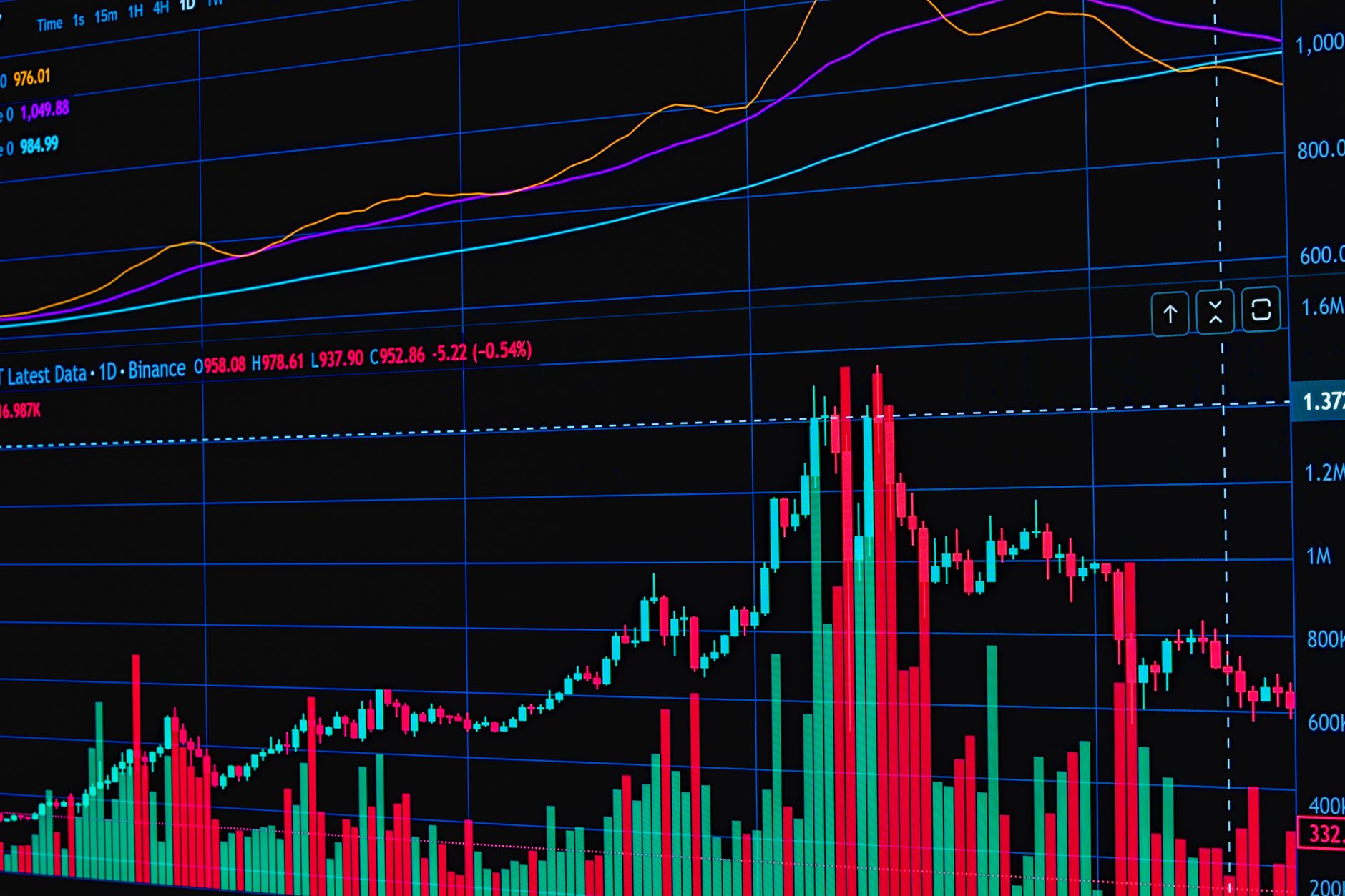
Photo by Pexels
One of the most reliable ways to gauge interest in Bitcoin ETFs is to watch net fund flows — how much money is entering or leaving the funds each day. Large, sustained inflows (particularly into IBIT/FBTC) signal growing demand; large outflows or conversions (like GBTC’s early post-conversion redemptions) can signal the opposite. Historically, heavy institutional inflows have coincided with stronger Bitcoin prices. We track this data on our Bitcoin ETF flows page, alongside the wider crypto market cap history and exchange volume rankings. Using these together gives a clearer picture than any single number. > ⚠️ Flows are a momentum signal, not a price guarantee — always combine them with broader context and manage risk. —
ETF
Expense Ratio
Promotional
Effective First-Year Cost on $10K
10-Year Cost on $10K (est.)
IBIT
0.25%
0.12% (first $5B AUM / first 12 months)
~$12
~$250
FBTC
0.25%
None
~$25
~$250
ARKB
0.21%
Zero-fee promo for 6 months on first $1B
~$10.50 (with promo)
~$210
GBTC
1.50% → tiered (~0.15% at high AUM tiers)
Fee decreases as AUM grows
~$150 at legacy rate
Varies widely
As of 2026, options on IBIT and FBTC are available on major US options exchanges (CBOE, Nasdaq). This means you can trade covered calls, protective puts, and other yield/hedging strategies on your Bitcoin exposure — something not possible with direct crypto holdings. ARKB options followed after initial IBIT volume proved the market. GBTC options are more limited due to the legacy trust structure. Options on Bitcoin ETFs add complex risk (leverage, expiration, assignment) — not for beginners — but they open sophisticated portfolio strategies. If you’re interested, start with our crypto trading strategies guide. ## Tracking Error and NAV: What Matters in Practice
IBIT and FBTC trade with the tightest premium/discount to NAV — typically within 0.1%–0.3%, thanks to deep authorized participant activity keeping price aligned. - GBTC’s history as a closed-end trust means it traded at 40%+ premium (2021) and then 48% discount (2022). Now that it’s an ETF with redemptions, it stays near NAV, but legacy volatility is baked into its trading culture. - Tracking error (how closely returns match Bitcoin’s price) is negligible for all four — within 0.5% annualized after expenses. The real performance difference comes from fees, not tracking. Bottom line: Don’t overthink tracking error for buy-and-hold. The fee and liquidity matter more.
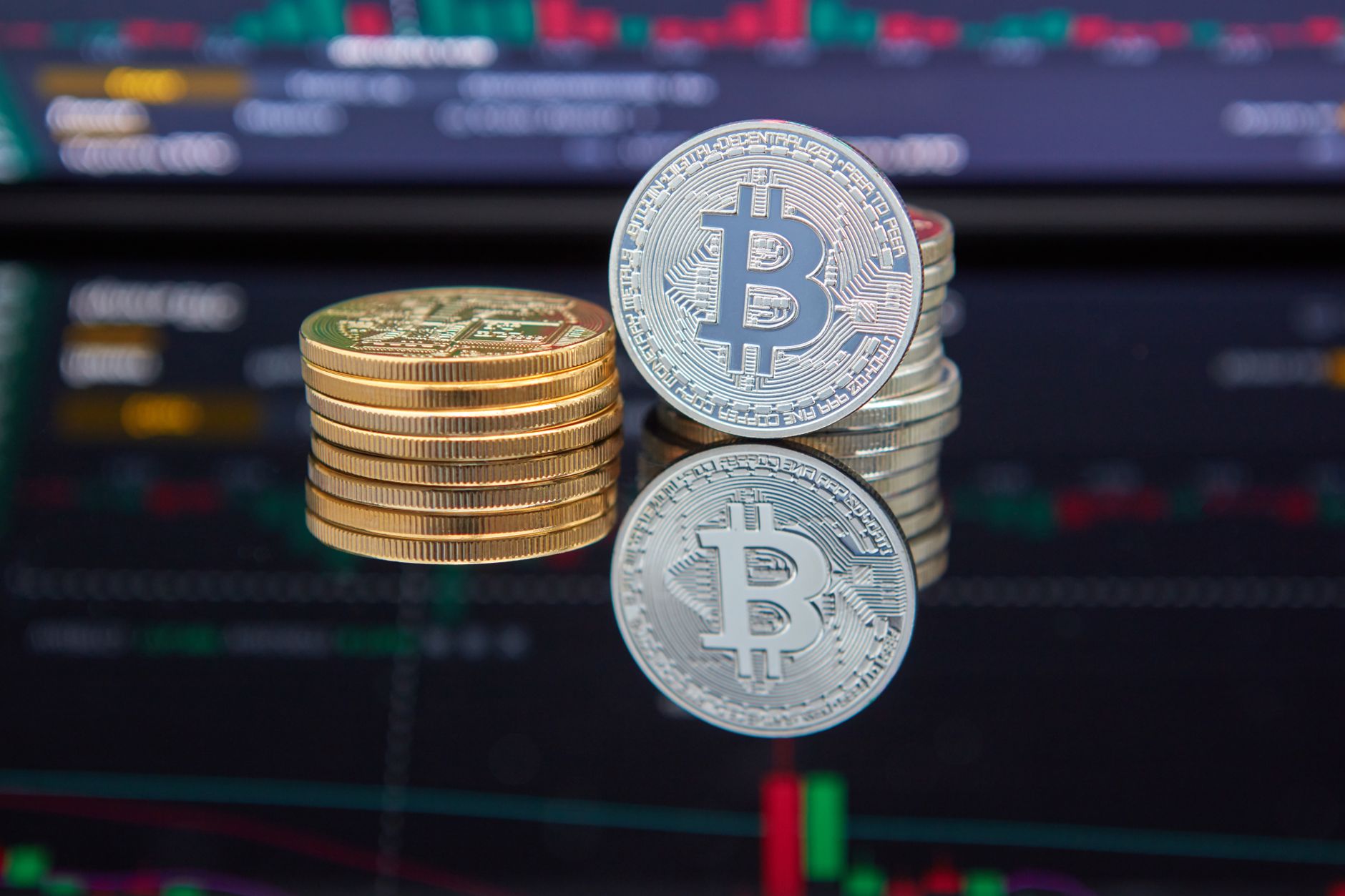
<img src="/images/best-bitcoin-etfs-body-4.jpg” alt=“Conceptual image of Bitcoin and Ethereum coins reflecting stock market graph for cryptocurrency trading.
Tax Advantages: ETF in an IRA/401(k) vs. Holding Bitcoin Directly#
One of the biggest reasons financial advisors steer clients toward spot Bitcoin ETFs is the retirement-account tax advantage, which direct Bitcoin ownership simply can’t match. Holding an ETF in a retirement account (IRA/Roth IRA/401(k)):
Roth IRA: gains grow and are withdrawn tax-free. - Traditional IRA/401(k): contributions reduce taxable income now, and gains are deferred until withdrawal. - No annual capital-gains paperwork — the account’s custodian handles everything, and you aren’t triggering taxable events when you rebalance or trade between funds. Holding Bitcoin directly (exchange/wallet):
Every sale, trade, or spend is a taxable event you must self-report. - Crypto-to-crypto trades count as disposals, creating capital gains even when you never convert to dollars. - You can’t shelter raw Bitcoin in a standard IRA — the IRS treats Bitcoin as property, and moving it into a retirement account involves complex, costly setups (like a self-directed IRA with a dedicated custodian). The practical result: for long-term, tax-aware investors, the ETF inside a Roth or traditional IRA is usually the most efficient vehicle. The trade-off is that you’re trusting a custodian rather than holding the asset yourself. For a comparison of the two approaches, see our US crypto tax guide. —
Which Bitcoin ETF has the lowest fee in 2026? ARKB (0.21%) has historically had the lowest base fee among major spot ETFs, though several newer or promotional tiers (like IBIT’s first-year 0.12%) can be cheaper in specific windows. Compare current sponsor fee schedules, including the GBTC tiered structure, before buying. ### Is a Bitcoin ETF better than buying Bitcoin directly? It depends. ETFs are simpler, work in IRAs/401(k)s, and avoid private-key management. Buying Bitcoin directly gives you self-custody and 24/7 trading. Most investors who want long-term, tax-advantaged exposure in a brokerage prefer the ETF route. ### Are Bitcoin ETFs safe? The major spot ETFs hold Bitcoin with qualified custodians, are SEC-registered, and undergo audits and proof-of-reserves checks. The main risks are Bitcoin’s own volatility and, theoretically, issuer or custodian failure — which is why IBIT (BlackRock) and FBTC (Fidelity) carry low institutional risk. ### How much Bitcoin do I need to buy a Bitcoin ETF? You can buy as little as one share — IBIT and FBTC trade around the same dollar magnitude as Bitcoin itself is expensive, so shares allow fractional, low-cost entry. A $100 monthly DCA into any of these is perfectly feasible. ### Can I hold a Bitcoin ETF in my Roth IRA? Yes. This is one of the biggest advantages — IBIT, FBTC, ARKB, and GBTC are all IRA-eligible, letting Bitcoin gains grow tax-free in a Roth IRA. ### How is a Bitcoin ETF taxed? Spot Bitcoin ETFs are taxed as securities: short-term gains (held <1 year) taxed at ordinary rates, long-term gains at capital gains rates. The ETF structure itself generally avoids the “constructive sale” complexity of direct crypto. See our US crypto tax guide for details.#